
This article is for general information only. It has been checked against the sources listed below but has not been reviewed by a medical professional.
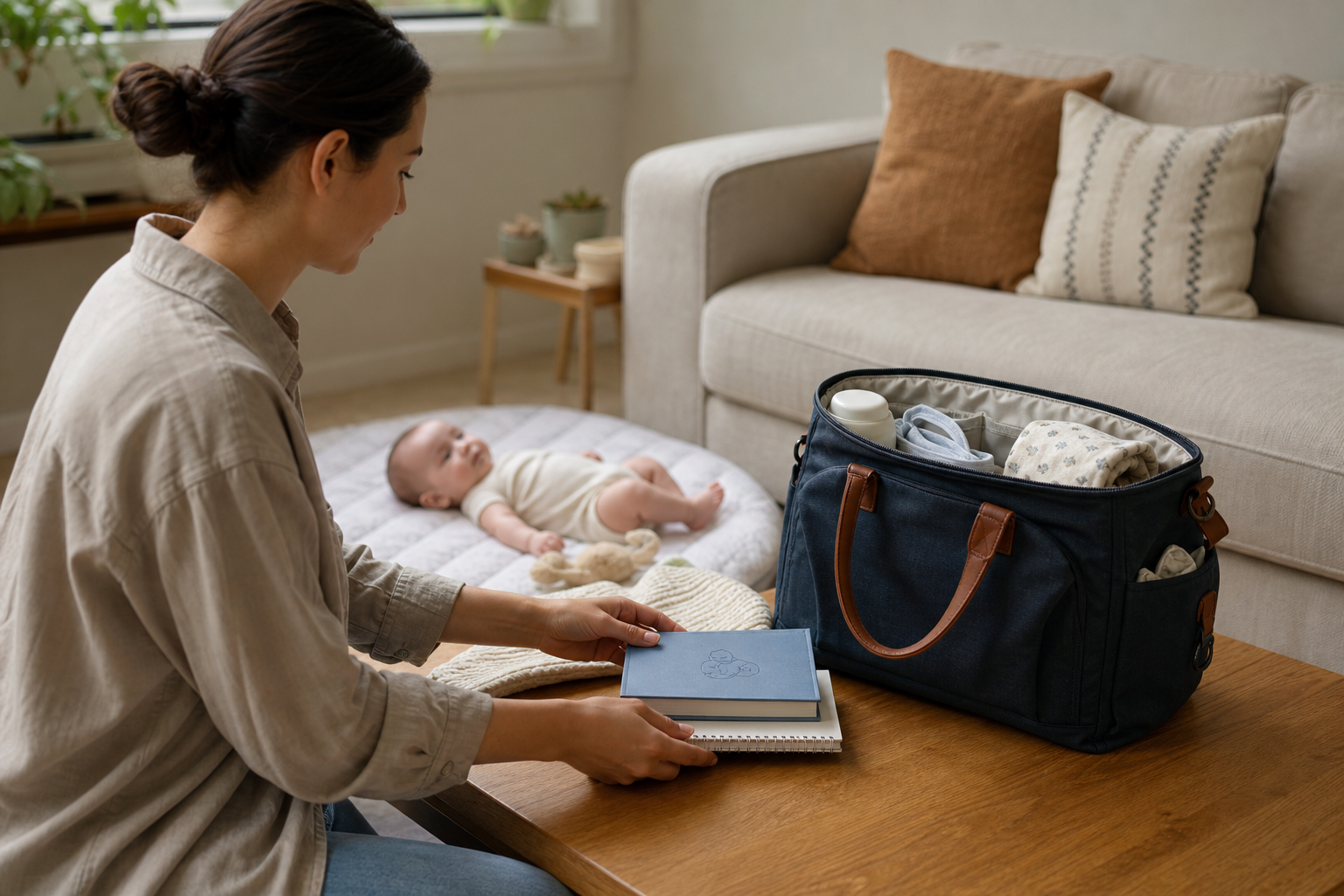
If you have recently had a baby in Australia, you may have been given a coloured paper book for your child’s health information. Depending on your state or territory, it may be called an infant health record, child health record, personal health record, Blue Book, Red Book, Green Book, Purple Book or another local name.
The exact name and contents vary, but the purpose is similar: to keep important information about your child’s health, growth, development and care in a parent-held record that can be used with health professionals. Pregnancy, Birth and Baby explains that book colours differ across Australia and advises parents to take the record to their child’s appointments.
General information only: This article has been checked against the Australian sources listed below but has not been reviewed by a medical professional. It is not medical advice and is not a substitute for advice from a qualified health professional.
What is an infant or child health record book?
An infant or child health record book is a paper record provided to parents and carers, usually around the time of birth. Health professionals can add information during appointments, and the book normally includes places for parents or carers to add details too.
For example, New South Wales (NSW) Health provides My Personal Health Record, known as the Blue Book. Children’s Health Queensland provides a personal health record known as the Red Book. These are state-specific examples, so it is best to follow the instructions in the book issued where your child lives.
What information may be recorded?
The sections differ between jurisdictions and editions. Australian official sources describe books that may include:
- birth and newborn information
- growth measurements and development information
- health and development check sections
- vaccination entries and other major health events
- notes added by health professionals
- places for parents or carers to record information, questions or family health history
Pregnancy, Birth and Baby’s infant health record guide gives a national overview. Your own book remains the best guide to the sections available for your child.
How can parents use the book?
Bring it to appointments
Pregnancy, Birth and Baby advises taking the infant health record to appointments with doctors, midwives, child health nurses, specialists and dentists, as well as to immunisation clinics and hospital visits. Children’s Health Queensland also says to take the Red Book whenever a child sees a health professional.
Complete the parent sections
Use the prompts and parent sections provided in your child’s book. These may include space for milestones, medicines, questions, family history or notes. Avoid changing entries made by a health professional; if something looks incorrect, ask the relevant service or professional how it should be updated.
Keep it somewhere easy to find
Store the book in a consistent place so it is easy to bring to an appointment. If it is lost or damaged, the replacement process depends on where you live. Queensland directs families to their nearest maternity hospital, while NSW Health provides separate replacement information through the Better Health Centre. Your state or territory child health service, doctor or child health nurse can point you to the current local process.
The book is not the same as every official record
Your child’s book may contain vaccination entries, but it is not the same as an Australian Immunisation Register (AIR) immunisation history statement. Children’s Health Queensland specifically notes that the Red Book cannot be used to show a child is up to date for child care or school. Services Australia explains that a complete AIR immunisation history statement can be used as proof for school or child care.
The paper book also does not replace records held by health services or health professionals. Keep following any instructions you receive about My Health Record, AIR statements, referral letters, test results or other official documents.
What can you keep alongside the paper book?
The paper book has limited space, so some families also keep a separate set of supporting information. This might include:
- questions to ask at the next appointment
- appointment details and follow-up notes
- photos or copies of documents
- extra care notes that do not fit in the book
- a simple index of where official documents are stored
The goal is organisation, not creating a second official record. A simple index of the paper book, supporting documents and appointment notes can make it easier to see what you already have and where it is stored.
How Nucentra can sit alongside the book
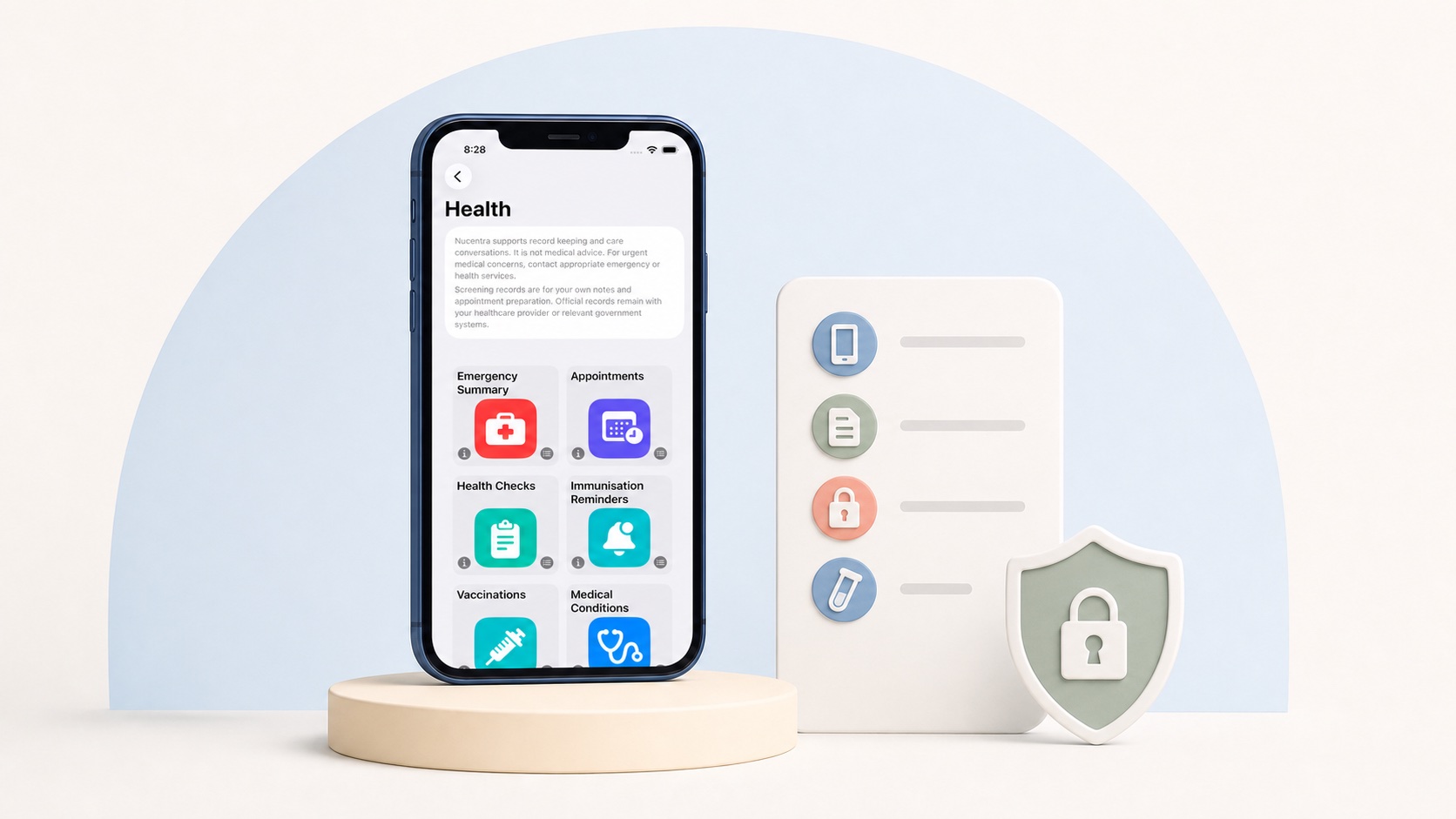
Nucentra is a private child health and care record companion for iPhone and iPad. It can help you organise appointment information, notes, documents, attachments and everyday care records alongside the paper book. Nucentra does not replace the child health record book, AIR, My Health Record, records held by health professionals or advice from a qualified health professional.
In the current version, Nucentra records are stored locally on the iPhone or iPad where the app is used. Nucentra does not currently provide cloud record sync, family sharing or clinician access. Depending on your Apple device and iCloud Backup settings, normal device backups may include Nucentra app data. Read the Nucentra Privacy Policy for current details. For downloads, visit Nucentra on the App Store.
Frequently asked questions
Does every Australian state use the same child health book?
No. The name, colour, sections and replacement process can vary by state or territory. Pregnancy, Birth and Baby links to the relevant child health record information for each jurisdiction.
Can a digital app replace the paper book?
A private app can help organise supporting notes and documents, but it should be used as a companion. Nucentra does not replace a state or territory child health record book, government system or record held by a health professional.
What if the book is lost?
Replacement arrangements vary. Contact your state or territory child health service, maternity hospital, doctor or child health nurse for current instructions.
Is the book proof of vaccination status?
Do not assume that entries in the paper book are accepted as proof. Services Australia identifies the complete AIR immunisation history statement as the document that can be used to prove immunisations are up to date for school or child care.
Sources
- Pregnancy, Birth and Baby — Infant health record (last reviewed July 2025; accessed 2 August 2026).
- Children’s Health Queensland — Red book (personal health record) (last updated September 2023; accessed 2 August 2026).
- NSW Health — Blue Book (2023 edition published 24 August 2023; accessed 2 August 2026).
- Services Australia — What an immunisation history statement is (last updated 1 July 2026; accessed 2 August 2026).
This article uses Australian health sources. If you live outside Australia, check advice from your local health authority or healthcare professional.